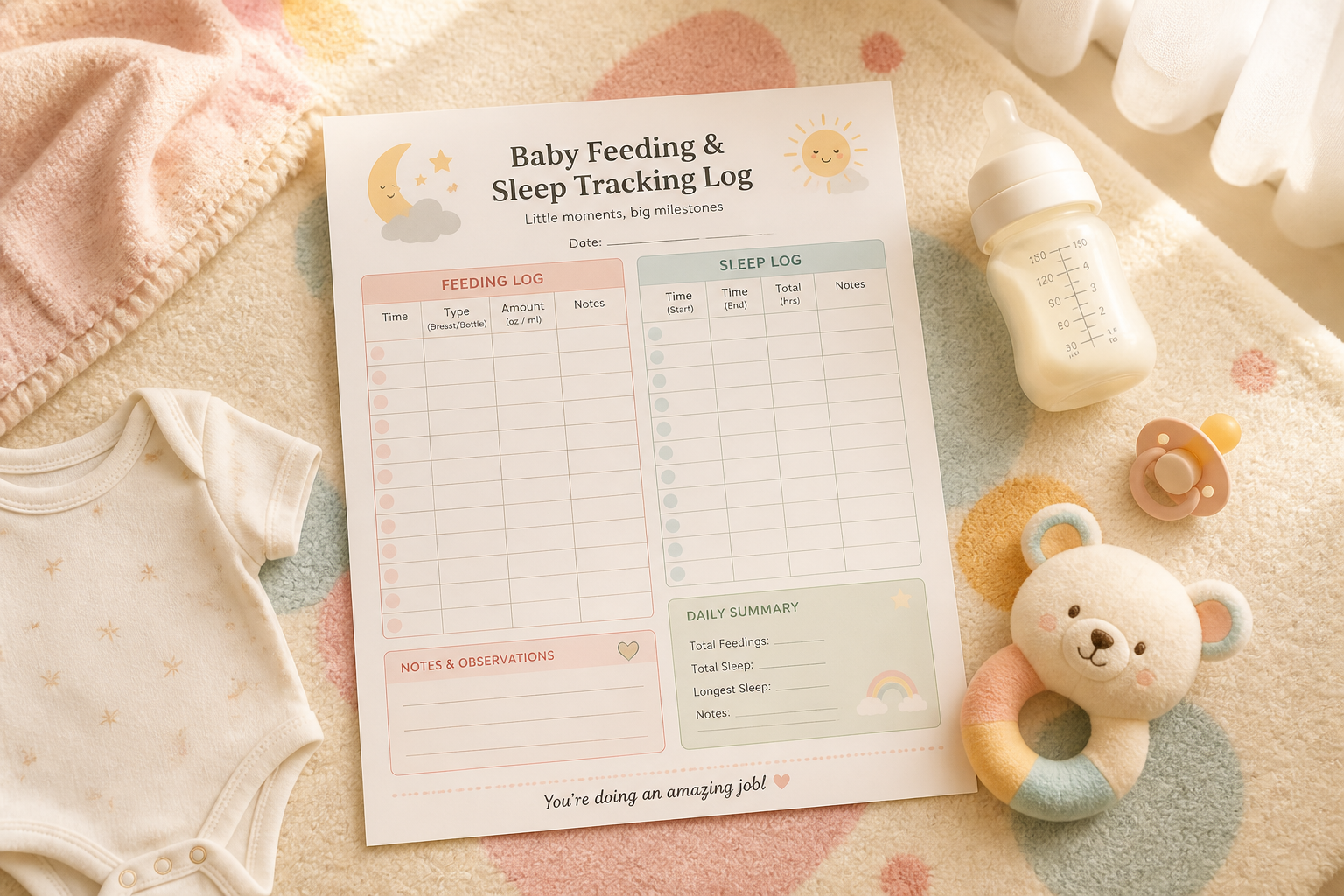
Newborn Baby Feeding, Sleep & Diaper Log: The Ultimate Printable Tracker Bundle for New Parents (Free Templates)
The first few weeks with a newborn are a blur of feedings, diaper changes, and fragmented sleep. Amidst the exhaustion, pediatricians ask: "How many wet diapers today? How long is each feeding? How many ounces?" And you're standing there thinking: I can barely remember what day it is.
A baby daily log is the single most practical tool for surviving the newborn phase with confidence. It eliminates the mental load of trying to remember when the last feeding happened, helps you spot patterns in your baby's behavior, and gives you concrete data to share with your pediatrician. This guide covers everything you need—feeding logs, sleep trackers, diaper charts, and babysitter handoff sheets—plus free printable templates you can customize and print right now.
Why Every New Parent Needs a Baby Log
Newborn care generates an overwhelming amount of information that's nearly impossible to track mentally:
| Data Point | Why Track It |
|---|---|
| Feeding times & duration | Ensures baby is eating enough; helps establish a routine |
| Breast/bottle amounts | Critical for weight gain monitoring |
| Wet diapers | Indicator of adequate hydration (pediatricians want 6+ wet diapers/day) |
| Dirty diapers | Tracks digestive health; changes can signal issues |
| Sleep patterns | Helps identify day/night confusion and establish sleep habits |
| Medication/vitamins | Ensures Vitamin D drops and any medications are given on schedule |
The PrintlyTool Baby Daily Log Template
PrintlyTool's baby feeding and sleep log combines all the essential tracking fields into one clean, printable page:
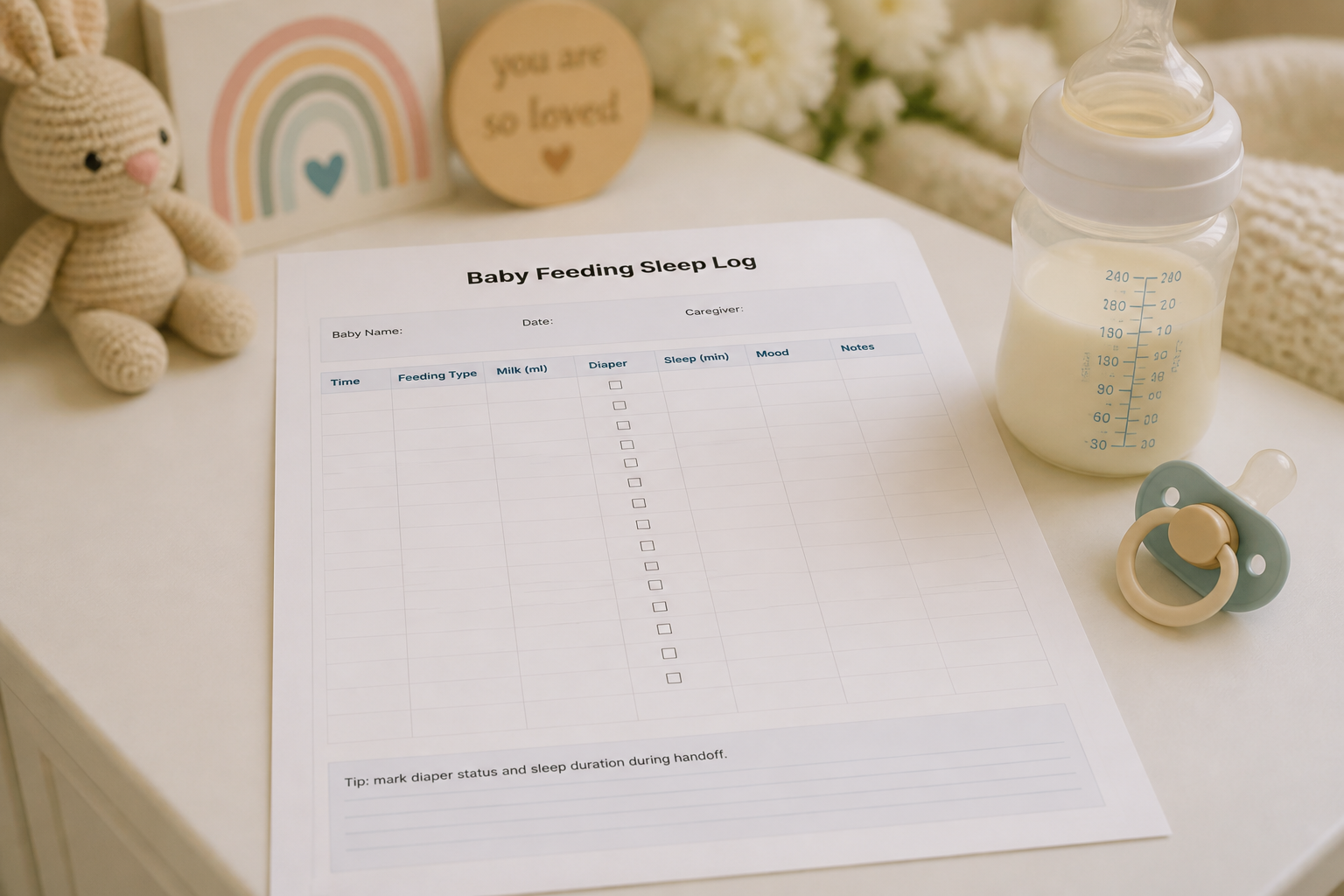
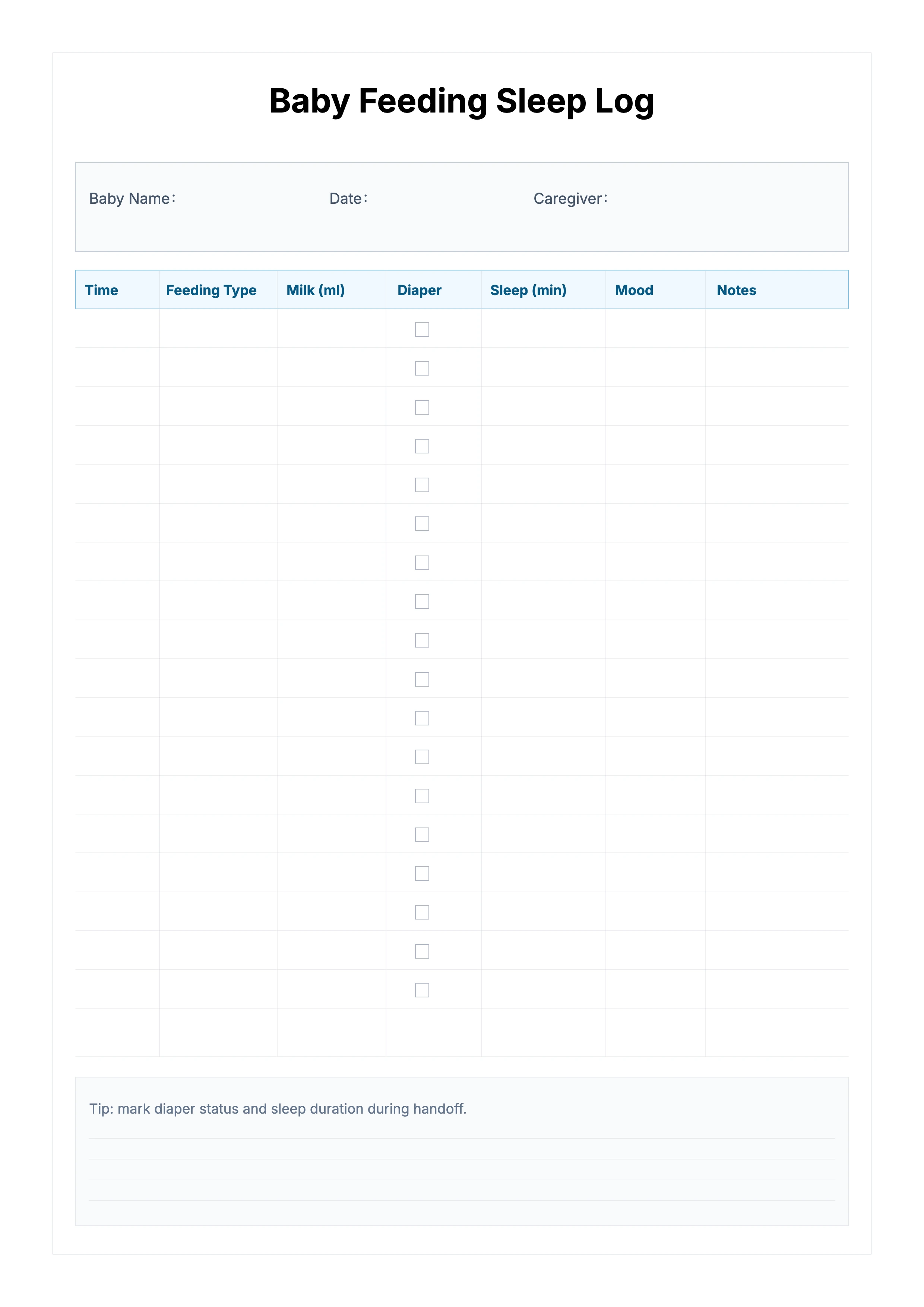
Free printable baby feeding and sleep log with feeding type, milk amount, diaper, sleep minutes, mood, and notes.
What this template tracks:
- Feeding: Time, type (breast/bottle/solids), amount or duration, and which side for breastfeeding
- Diaper Changes: Wet and dirty diaper count with time stamps
- Sleep: Nap start and end times, total sleep duration
- Mood/Notes: Baby's disposition and any observations (fussy, gassy, rash, etc.)
How to Use the Baby Log Efficiently
- Keep it where you feed: Tape it to the nursery wall or keep it on the nightstand
- Fill it out immediately: Don't wait—you WILL forget
- Use shorthand: B for breastfeeding, F for formula, W for wet diaper, D for dirty
- Review daily: Spend 2 minutes each evening reviewing patterns
- Bring it to checkups: Your pediatrician will appreciate the detailed data
Babysitter Information Sheet: Essential for Peace of Mind
Leaving your baby with a sitter for the first time is nerve-wracking. A comprehensive babysitter information sheet ensures that whoever is caring for your child has all the critical information at their fingertips—even in an emergency:
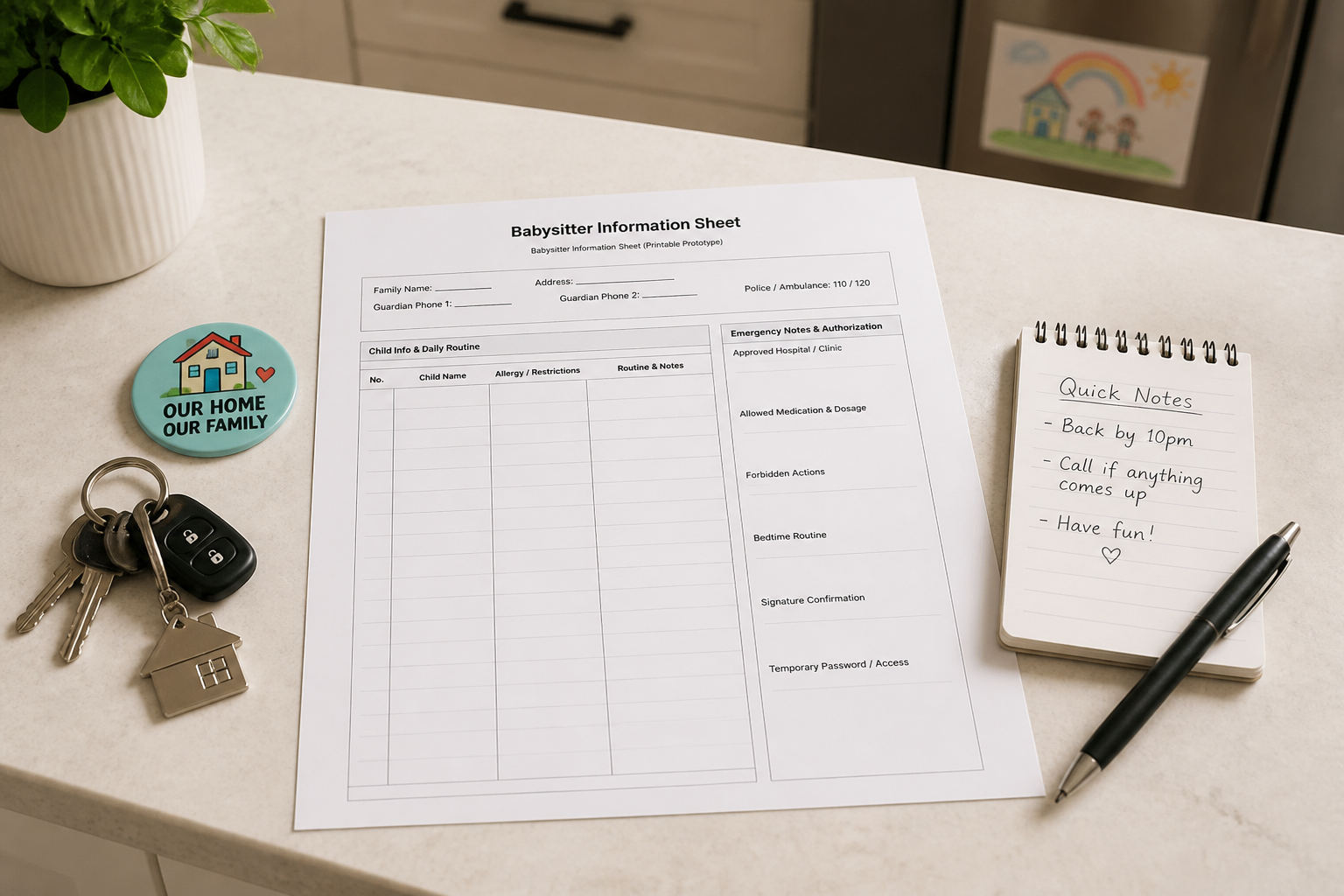
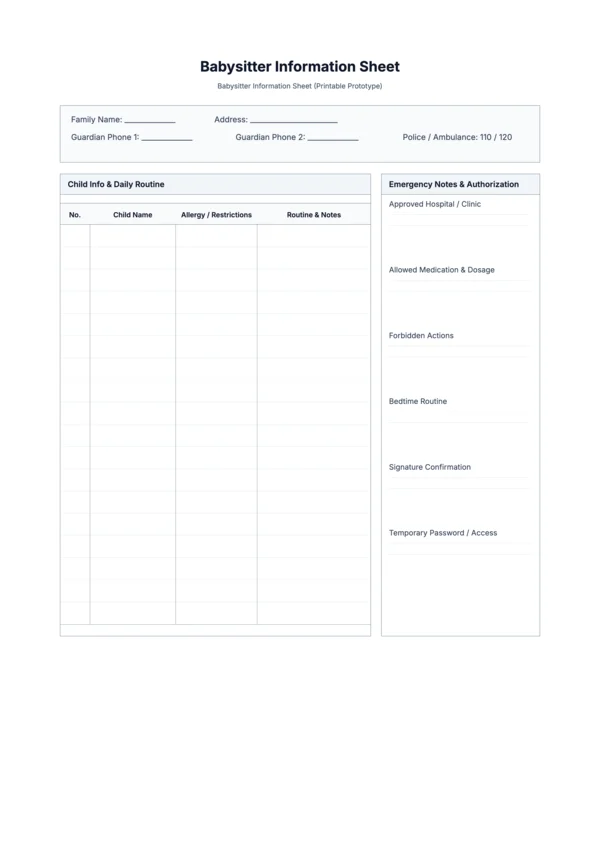
Download a free printable babysitter information sheet with guardian contacts, child routines, restrictions, and emergency authorization notes.
What to Include in a Babysitter Sheet
| Section | Details |
|---|---|
| Parent Contact Info | Both parents' phone numbers, work numbers, and backup contacts |
| Child Information | Full name, age, allergies, medical conditions, medications |
| Emergency Contacts | Pediatrician name and number, nearest hospital, poison control |
| Feeding Instructions | What, when, how much; any food allergies or restrictions |
| Bedtime Routine | Step-by-step routine so the sitter can replicate it |
| House Rules | Screen time limits, off-limit areas, pet instructions |
| Emergency Authorization | Permission to seek medical treatment if parents can't be reached |
Tips for First-Time Babysitter Handoffs
- Print and laminate the sheet so it can be reused
- Walk through it verbally before you leave—don't just hand it over
- Add a recent photo of your child to the sheet
- Update it regularly: medications, routines, and emergency contacts change
Building Your Complete New Parent Toolkit
The newborn phase doesn't last forever, but the right tools make it infinitely more manageable. Here's your complete tracking toolkit:
- Baby Feeding & Sleep Log — your daily command center for tracking everything
- Babysitter Information Sheet — peace of mind when you need a break
- Weekly Meal Planner — once solids start, meal planning becomes essential; PrintlyTool offers a weekly meal planner template for this next phase
- Family Chore Chart — when older siblings join the family, a chore reward chart helps keep the household running
Related Resources
- As your child grows, explore more educational printables in our Free Printable Worksheets for Kids guide
- Managing the whole household? See our Pet Care Record guide for tracking pet medications and sitter information with similar log-based templates
- Once you've mastered the newborn phase, get the household organized with the Home Inventory & Insurance guide for protecting what matters most
FAQ
Q: How long should I keep tracking feedings and diapers?
Most pediatricians recommend detailed tracking for the first 2-4 weeks, especially until the baby regains birth weight. After that, you can shift to a simplified log focused on feeding times and any concerns. Resume detailed tracking if you notice changes in feeding patterns, diaper output, or if your pediatrician requests it.
Q: Is there a difference between breastfeeding and formula feeding logs?
Yes. A breastfeeding log should track which side you nursed on and the duration of each session, while a formula log tracks the number of ounces consumed. PrintlyTool's template accommodates both, with separate fields for breast, bottle, and solid feeding types.
Q: Can I use these templates for daycare communication?
Absolutely. Many parents print a daily log and ask daycare providers to fill it out. This creates a consistent record across home and daycare environments. The babysitter information sheet is also useful for daycare as an emergency contact reference.
Q: Can I use the baby log to track multiple babies (twins)?
Yes. Print two separate copies of the log and label each with the baby's name. For twins, color-coding the logs (e.g., one pink, one blue) helps caregivers quickly identify which log belongs to which baby. In the feeding section, you may want to add an extra column to distinguish between babies if you prefer a single combined sheet.
Q: What's the best way to share the log between parents or caregivers?
Keep the printed log in a central, visible location (like the kitchen counter or nursery door). For digital sharing, consider taking a photo of the completed log at the end of each day and sharing it in a family group chat. This keeps both parents informed even if one is at work.